
The shape of it, never a scorecard
Journaling long enough produces something a single entry can’t show you: a shape. A mood line across months, the feelings that keep recurring, the weeks that ran heavy. All of it described plainly — and none of it graded.

One chart up front, the rest folded away
The mood timeline is the only thing you meet by default. Everything else waits behind a tap, so Insights never opens as a dashboard.
-
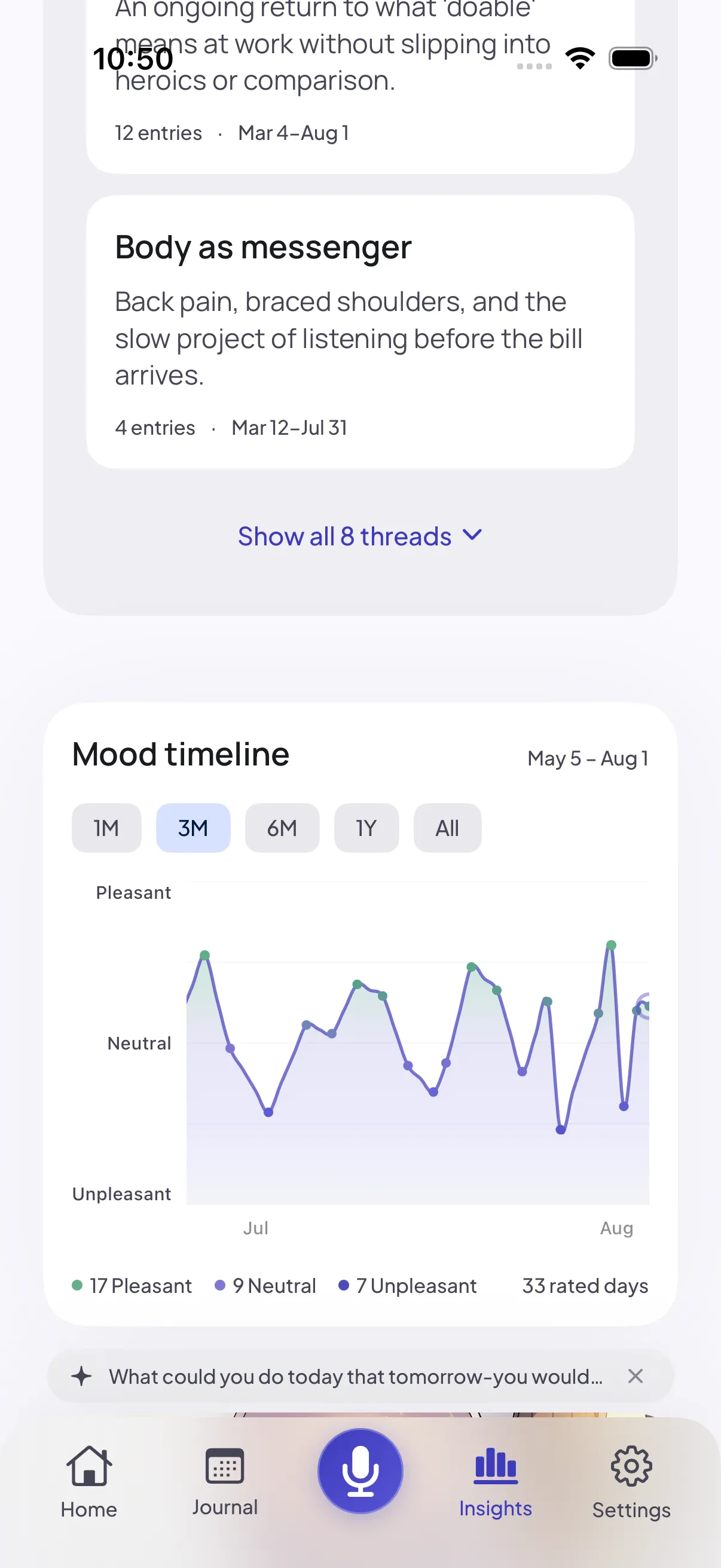
The mood timeline
Pleasant to unpleasant, across the range you choose — up to everything you’ve ever written.
-
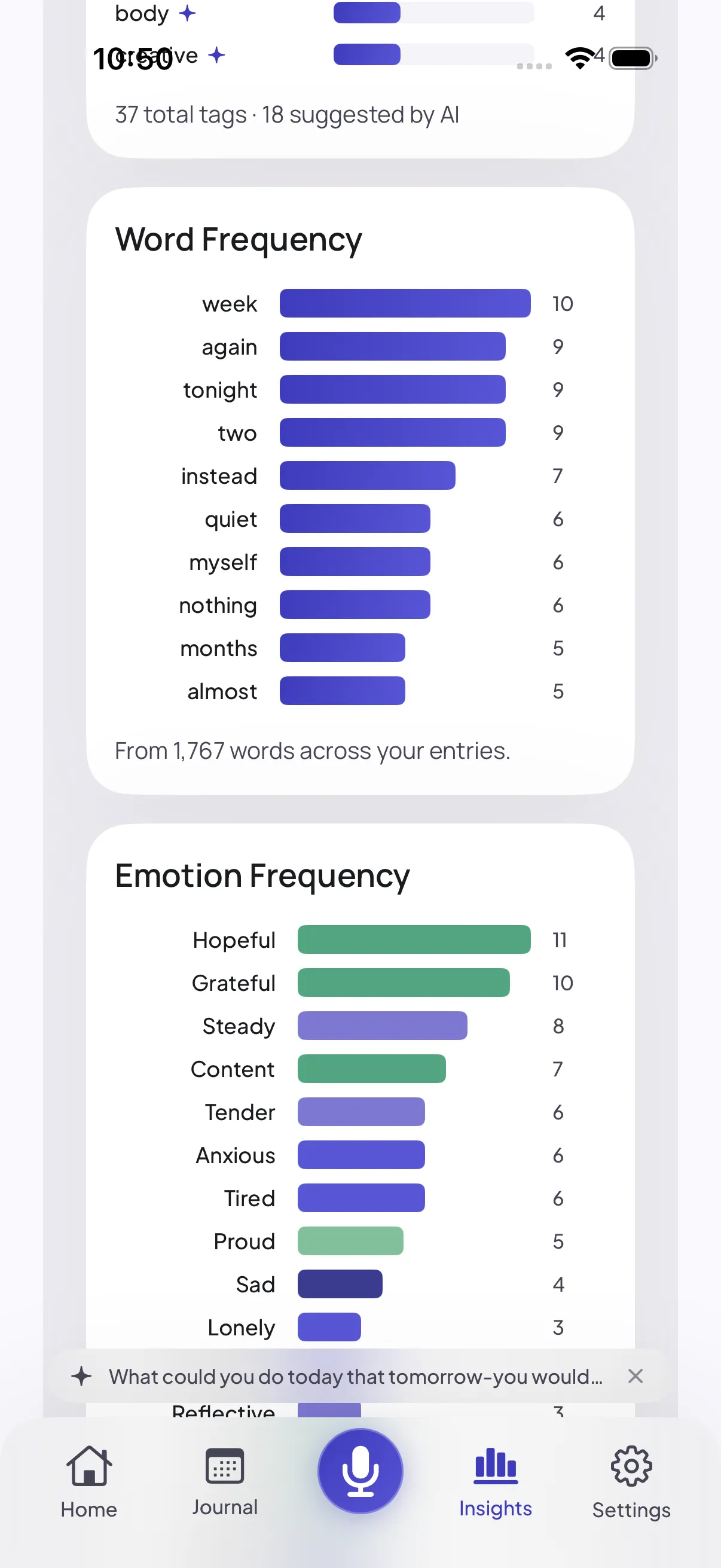
Which feelings, how often
The words you actually use, counted and coloured by where they sit for you — under the plainer count of which words come up at all.
-
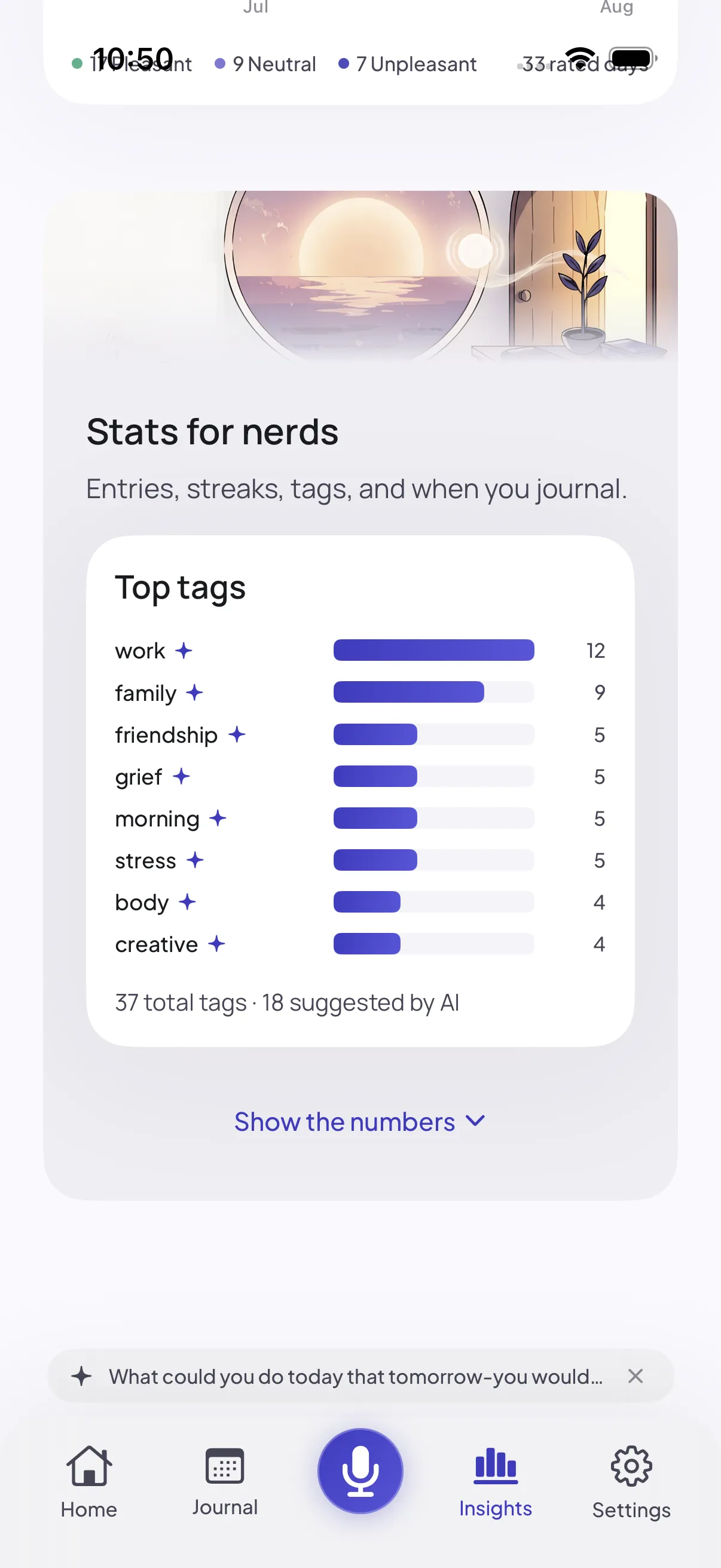
The rest, if you want it
Entries, streaks, tags and timing all sit behind one disclosure — named, honestly, “Stats for nerds”.
Six quiet readings of your own weeks
Everything here is descriptive. It tells you what happened, and stops there.
-
Mood over time
A single line across weeks or years. Tap any day to see what it was made of, and pan back as far as you’ve been journaling.
-
Emotion frequency
Which feelings actually come up most, in your own vocabulary — not a fixed list of six faces someone else chose.
-
What shows up together
The feelings that tend to arrive in pairs. Often the more interesting reading than any single one on its own.
-
When you journal
The days and the hours you tend to reach for it — usually a better clue about your weeks than about your journaling.
-
What you talk about
The tags and words that recur most across everything you’ve said.
-
Mood by weekday
Whether Sunday evening really is heavier for you, or whether that was just a story you were telling yourself.
Not a habit tracker wearing a calmer palette
The absence of streaks here is a design decision, not an omission.
-
No goals, no targets
There is nothing to hit. No chart has a line you’re supposed to stay above, and nothing turns red.
-
No mood homework
You never have to log anything. Mood comes along with the entries you already make — and you can correct it when it reads you wrong.
-
Your emotion words
The emotion library is yours to edit. Rename what doesn’t fit, add your own, and move any word to where it actually sits for you.
A mood history is not something to hand over
Months of emotional data is exactly the kind of thing other apps monetise. This one can’t — there’s no account attached to it.
-
Counted on your iPhone
These charts are drawn from the entries already on your device. Nothing is uploaded to produce them.
-
Never sold, never trained on
Your mood history isn’t a product. It isn’t sold, shared, or used to train AI models — there’s no account it could even be attached to.
-
Not health records
This is a journal describing what you said, not a clinical assessment of you. It doesn’t diagnose, and it doesn’t report to anyone.
Questions about mood & insights
Do I have to log my mood every day?
No. Mood comes along with the entries you already write or speak, and you can adjust it if it read you wrong. Skip a week and nothing breaks.
Is this a streak tracker?
No. There are no targets, no goals, and nothing turns red. The charts describe what happened — they never grade it.
Can I change the emotion words?
Yes. The emotion library is yours to edit: rename what doesn’t fit, add your own, and move any word to where it actually sits for you.
What if I journal irregularly?
The mood timeline is built for that — it breaks the line across long gaps instead of drawing a straight one through weeks you said nothing.
Be there when it opens
Smart Journaling is in final testing. Leave your email and we’ll send a single note the day it’s live on the App Store — plus a chance to join the beta early. No spam, ever.
Already keen? Join the TestFlight beta →
By joining you agree to receive one launch email. See our privacy policy.